
Rwanda’s Volcanoes National Park stands as one of the foremost locations for observing mountain gorillas in their natural habitat. The park shelters several habituated groups, each occupying distinct ranges within its volcanic slopes. Trek durations and physical demands vary significantly, shaped by factors such as altitude, distance from trailheads, and daily gorilla movements. These differences mean some gorilla groups in Rwanda are accessible within relatively short, less strenuous walks, while others require extended ascents through forested gradients.
This article examines the gorilla groups in Rwanda that are best suited for visitors seeking lower-intensity treks. The goal is to provide precise, field-informed guidance that aids in planning. If you value clarity in preparation (and most do before committing to a journey of this kind), the following sections will detail the easiest groups to reach, the criteria used to define accessibility, and practical measures to ensure a comfortable experience.
Understanding Trek Difficulty in Volcanoes National Park
Trek difficulty in Volcanoes National Park is shaped by multiple variables, beginning with the distribution of gorilla groups across the park’s volcanic massifs. Sabyinyo, Gahinga, Muhabura, Bisoke, and Karisimbi each present different gradients, vegetation density, and altitudinal ranges. Groups ranging at higher elevations, such as on the flanks of Karisimbi, often require longer hikes exceeding four hours. In contrast, those feeding and nesting on lower slopes may be reached in under two hours. Seasonal rainfall patterns from March to May and again in October to November can also influence trail conditions by softening soil and increasing slipperiness.
Beyond geography, operational protocols affect trek difficulty. Every morning at park headquarters in Kinigi, rangers review the previous day’s tracking data, which includes group location, distance, and elevation change. Visitors are then assigned to groups according to declared fitness levels, interest, and logistical considerations. This dynamic allocation ensures that less physically demanding groups are reserved for individuals who require them, including older visitors or those with limited mobility.
For your planning, it is worth noting that the assignment process is not random but based on informed judgment from trackers with years of experience. They know which routes have fewer steep climbs, where vegetation thins out naturally, and how to adjust for weather. This makes your request for an easier group far more likely to be successful when communicated clearly during the briefing.
READ ALSO: Understanding the $1500 cost of Gorilla Trekking in Rwanda
Criteria for Identifying the Easiest Gorilla Groups
Geographic Positioning
Gorilla groups located on the lower slopes of Sabyinyo, Gahinga, and Muhabura typically require shorter approach walks. These areas present gradual inclines, fewer altitude shifts, and open forest gaps that reduce walking resistance. Besides distance, altitude gain remains a primary determinant of physical demand, with routes under 500 metres of elevation change generally considered low difficulty.
Access Logistics
Groups with trailheads close to park roads often require less time to reach. In addition, well-defined ranger paths limit obstruction from undergrowth and natural debris. Porters play a key role here, as they can maintain pace and stability for guests carrying equipment or water (and yes, that extra camera lens does make a difference). The proximity of ranger stations also reduces pre-trek transfers, streamlining the start of the hike.
Seasonal Stability
Some groups maintain lower-slope ranges throughout the year, while others shift with seasonal food availability. In the rainy months of March to May and October to November, certain groups favour bamboo zones near the park’s outer boundaries. This pattern provides consistently shorter treks. For your planning, choosing dates when these groups remain near accessible feeding zones can significantly improve comfort and predictability.
Gorilla Groups in Rwanda Best for Less-Fit Trekkers
1. Sabyinyo Group
The Sabyinyo Group ranges on the lower slopes of Mount Sabyinyo, close to the Volcanoes National Park headquarters at Kinigi. This location significantly reduces pre-trek travel, making it one of the most accessible groups in Rwanda. The habitat consists of bamboo stands interspersed with Hagenia-Hypericum woodland between 2,500 and 3,000 metres above sea level. The understory here is more open than in many parts of the park, allowing easier passage.
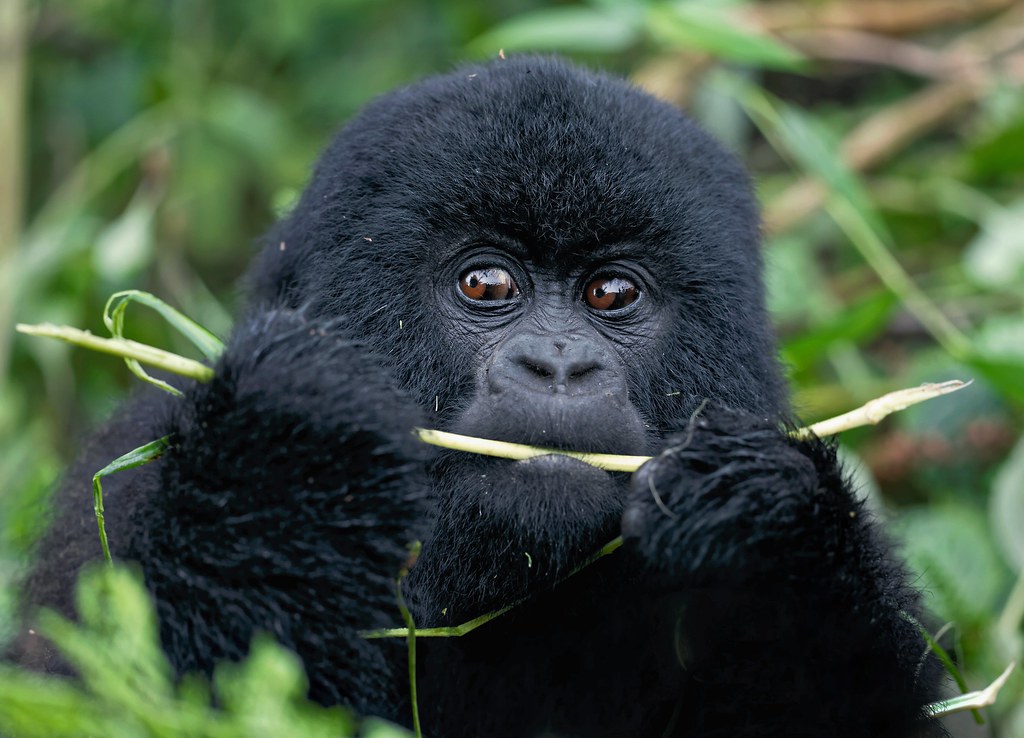
Led by the dominant silverback Guhonda, weighing around 220 kilograms, the group maintains a relatively stable home range that enables trackers to predict their daily positions with fair accuracy. Guhonda’s presence, along with the group’s size, often becomes a talking point during pre-trek briefings. The combination of gentle inclines, shorter walking distances, and clear trails makes this family a prime assignment for less-fit trekkers.
Key details:
- Approximate size: 12–17 individuals, including three silverbacks.
- Habituation: Early 1990s, formed from members of Groups 13 and 11.
- Typical trek duration: 1.5–2 hours from the trailhead.
- Elevation gain: Approximately 300 metres.
- Observation: Stable viewing positions due to predictable movements and open spaces in feeding areas.
2. Agashya Group (Group 13)
The Agashya Group occupies much of the same bamboo-dominated lower slopes as Sabyinyo, ranging between 2,500 and 3,000 metres. Originally numbering 13 individuals at habituation, hence its original name, the group has expanded to over 25 members through births and integrations from other families. Leadership rests with the silverback Agashya, who is known for leading the group into less disturbed feeding zones if he perceives any threat.
The approach route to Agashya’s range is relatively short, averaging under 4 kilometres from the trailhead with gradual inclines. Ranger-maintained trails ensure good footing, even during the wetter months. For visitors, the group’s larger size allows for multiple observation angles during the one-hour visit, with frequent opportunities to see mothers with infants as well as juveniles in active play.
Key details:
- Approximate size: 25–27 individuals, including at least two silverbacks.
- Habituation: Mid-1990s.
- Typical trek duration: 2–2.5 hours from the trailhead.
- Elevation gain: Less than 350 metres.
- Observation: Multiple social interactions are visible at any given time.
3. Hirwa Group
Formed in July 2006 when members from the Sabyinyo and Agashya groups came together, Hirwa is aptly named. The word means “the lucky one” in Kinyarwanda. This name gained even more meaning in 2011 when the group welcomed a rare set of twin infants. The group’s range spans the lower slopes between Mount Sabyinyo and Mount Gahinga, an area that offers gentle approaches and minimal elevation gain, particularly in the bamboo shoot season from April to May when they feed closer to the park boundary.
Today, Hirwa remains smaller than many other families, which can work in a visitor’s favour, as its compact size increases the chances of observing all members at once. The group has been led by silverback Uburanga since 2019, following the death of its founding leader Munyinya. Juvenile activity is high, making the observation hour engaging and often unpredictable (in the best way possible).
Key details:
- Approximate size: Around nine individuals, including one silverback.
- Habituation: 2006.
- Typical trek duration: 2 hours from the trailhead.
- Elevation gain: Minimal, usually under 200 metres.
- Observation: High visibility of all members due to compact group structure.
3. Kwitonda Group
The Kwitonda Group occupies the lower slopes of Mount Muhabura, typically between 2,600 and 3,000 metres in bamboo and Hagenia woodland zones. Known for its multiple silverbacks, currently four, the group provides rich opportunities to observe varied dominance displays and social negotiations. The group migrated from the Democratic Republic of Congo before habituation and has adapted well to the Rwandan ranges.
Trekking to Kwitonda involves a gradual ascent over moderately open understory, with approach times generally between two and three hours. Seasonal feeding patterns influence their predictability; during the dry months from June to September, they tend to maintain established routes, allowing trackers to guide visitors with confidence.
Key details:
- Approximate size: About 23 individuals, including four silverbacks.
- Habituation: Early 2000s, after migration from the DRC.
- Typical trek duration: 2–3 hours from the trailhead.
- Elevation gain: Moderate, often 300–400 metres.
- Observation: Complex social interactions due to multiple silverbacks.
Preparing for an Easy Gorilla Trek
Planning for an easy-access gorilla trek in Rwanda begins well before you arrive at Volcanoes National Park. The park’s allocation system matches visitors to groups on the morning of the trek, based on declared fitness levels, interest, and recent group locations. Communicating your preferences clearly at that briefing is essential, as rangers use this input alongside tracking data from the previous day to decide assignments.
Physical readiness still matters, even for less demanding routes. Incorporating short uphill walks into your daily routine in the weeks before your trip helps your body adjust to the altitudes between 2,400 and 3,000 metres. If you have access to gentle hill trails, aim for 30–40 minutes of walking at a steady pace, carrying a light pack. This mimics trek conditions and improves stamina without overexertion.
Recommended equipment for easy-access treks:
- Footwear: Waterproof hiking boots with good ankle support for uneven forest paths.
- Clothing: Long-sleeved breathable shirts and long trousers to protect from nettles and insects.
- Rain protection: Lightweight poncho or rain jacket, even in dry months, as rainfall can be localised.
- Support gear: Trekking poles for stability, especially in wet conditions.
- Extras: Gardening gloves for gripping vegetation, a water bottle, and light snacks.
Moreover, employing a porter is beneficial, even on shorter routes. Porters assist with carrying gear, maintaining pace, and providing stability on steeper or slippery sections. Many porters are also ex-poachers now engaged in conservation, so your hire directly supports community livelihoods (a fact that surprises some guests).
Timing your visit can also improve your chances of being assigned to an easy group. In the bamboo shoot season, groups such as Hirwa and Sabyinyo remain in the lower ranges, making them more accessible. Dry months from June to September and December to February offer firmer trails, reducing exertion.
On the day of your trek, arrive early at the park headquarters. This ensures you have time for briefing, equipment checks, and conversations with your guide about your preference for a less strenuous route. Speak plainly about your needs—rangers appreciate clarity, and your comfort on the trail will benefit from it.
Seasonal Considerations
Seasonal changes in Volcanoes National Park directly influence which gorilla groups are most accessible. The park has two wet seasons from March to May and from October to November, as well as two dry seasons from June to September and from December to February. Wet months bring heavier rainfall that saturates soils and makes trails slippery, particularly on slopes with greater incline. This increases trek difficulty and can extend approach times by 30 to 45 minutes.
During the dry months, trail conditions stabilise, which allows easier access to families that range at lower elevations. Groups such as Sabyinyo, Agashya, and Hirwa maintain shorter feeding ranges in these months, often remaining closer to park boundaries. This stability benefits less-fit trekkers because approach distances typically stay within the 1.5 to 3-hour range.
Each morning at the Kinigi headquarters, park staff assign visitors to gorilla groups. The process starts with a briefing on safety, environmental conditions, and the most recent tracking data. Rangers then assess visitor fitness levels, age, stated preferences, and logistical needs. Communicating a request for an easier trek during this briefing greatly improves the chances of being matched with a group that requires less exertion.
Operational quick-reference:
- Wet season months: March to May and October to November
- Dry season months: June to September and December to February
- Best easy-access group availability: During the dry season and in the bamboo shoot season from April to May
- Morning briefing time: 07:00 to 07:30 at Kinigi headquarters
- Assignment factors: Fitness declaration, recent group location, and seasonal accessibility
In addition, visiting during periods of bamboo abundance often keeps certain groups, such as Hirwa, within a few hundred metres of the park boundary. On those days, some guides quietly say the trek feels shorter than usual, although proper footwear and preparation remain essential.
Conclusion
Every trek into Rwanda’s Volcanoes National Park begins with a sense of anticipation. The early morning briefing, the quiet readiness of the rangers, and the knowledge that the day will bring a direct connection with one of the world’s most remarkable primates create a distinctive atmosphere.
An easier trek is not simply about limiting exertion. It is about choosing an approach that allows you to remain fully present during the hour of observation. The forest becomes a living backdrop, and the focus shifts to details that might otherwise pass unnoticed: the rustle of leaves as a juvenile shifts position, the soft grunt of a silverback acknowledging his family, the light changing in the canopy above.
For many, the reward lies in the depth of attention they can give to the moment. By moving deliberately and allowing the experience to unfold at its own pace, the connection between visitor and habitat takes on a different quality. It becomes an observation that is both personal and enduring, shaped not by distance travelled but by the clarity with which it is remembered.