In the south-western hills of Uganda, where the borderlands of Kanungu District meet the edges of Bwindi Impenetrable National Park, a quiet social project continues to grow in scale and relevance. Ride 4 a Woman, a community-based initiative based in Buhoma, exists to address the practical needs of women living near one of Uganda’s most visited conservation areas.
Its operations focus on equipping women with income-generating skills, counselling services, and support systems grounded in local realities.
This is not a tourism attraction in the conventional sense. It is a working hub of activity shaped by sewing machines, bicycles, cultural instruction, and public health outreach. Ride 4 a Woman integrates community welfare with the tourism economy by placing local women at the centre of economic participation.
Visitors to Bwindi, many arriving for gorilla tracking, interact directly with the project through workshops, performances, and artisan crafts. That interaction creates both economic and interpersonal linkages.
If you plan to visit Bwindi, you will likely pass through Buhoma. You may even step inside the project compound. But before you do, it helps to understand the organisational logic behind what you’ll see, hear, and possibly buy. Ride 4 a Woman is a functioning ecosystem rooted in resilience, gender equity, and deliberate action.
Founding and Vision
Ride 4 a Woman began in 2009 as a response to urgent social realities facing women in the Buhoma community. Evelyn and Denis Habasa, both residents, recognised that many women in the area lacked independent income, formal education, or access to safe support structures.
Domestic violence, food insecurity, and social isolation were recurring issues. With limited external resources but strong community backing, the Habsas registered the project as a non-profit organisation focused on addressing those gaps through skills-based support.
The organisation’s name reflects its initial activity: renting out bicycles to raise funds for women. Yet its founding vision stretched far beyond that. Evelyn, drawing from her own lived experience, saw economic independence as inseparable from dignity.
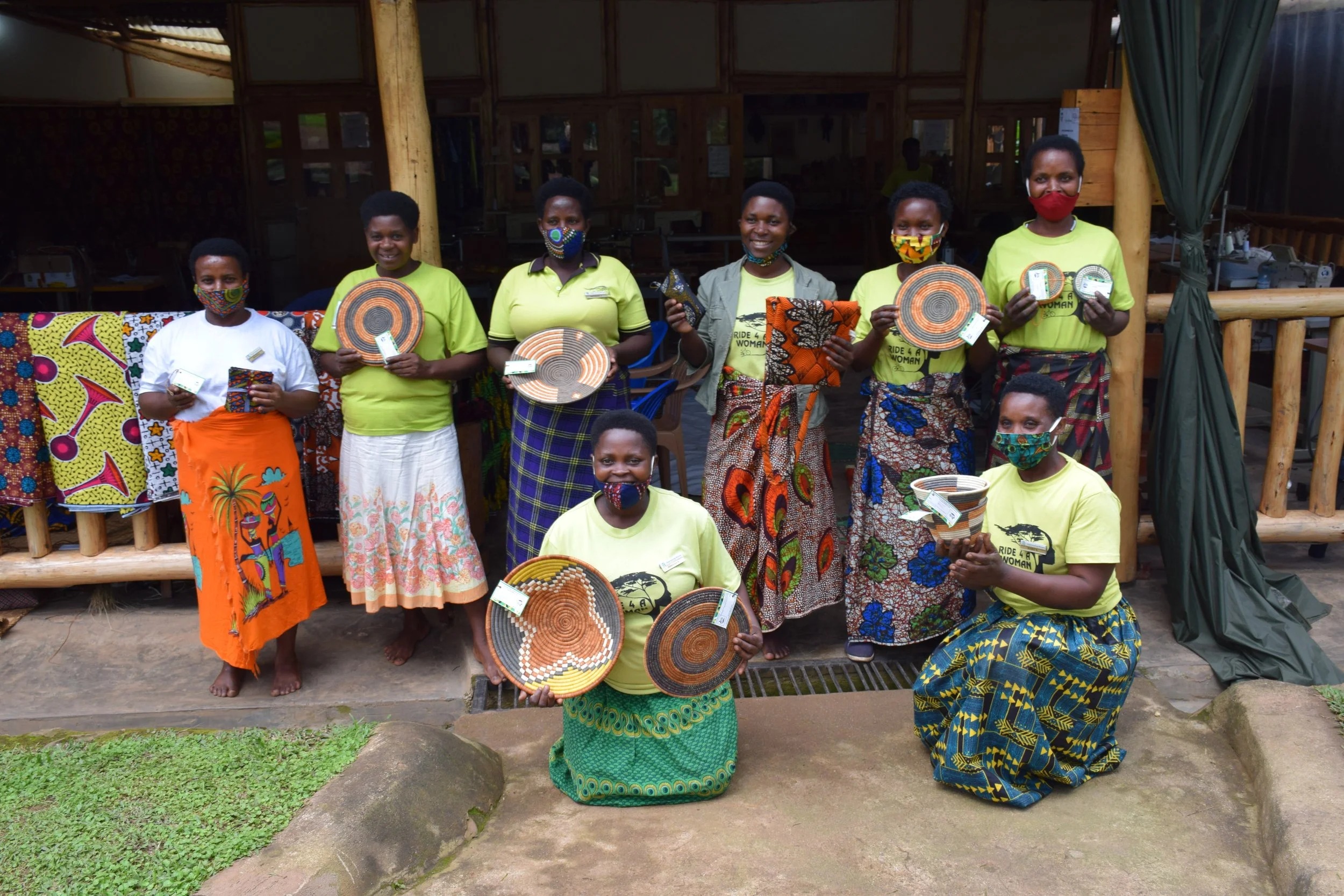
Ride 4 a Woman was structured to provide women with tools, both literal and social, to support themselves without waiting for charity. Sewing machines, thread, cloth, wood, beads, bicycles—these became instruments of agency.
You might ask what kind of vision sustains a rural initiative for over a decade. It is one built around consistency, shared purpose, and direct benefit to the women it serves. The centre is open year-round.
Women show up daily to sew, mend, cook, dance, speak, and plan. There’s no external spectacle here, just a persistent rhythm that reflects the founders’ original purpose: to build local capacity through long-term participation.
Core Activities and Programs
Economic Skills Training
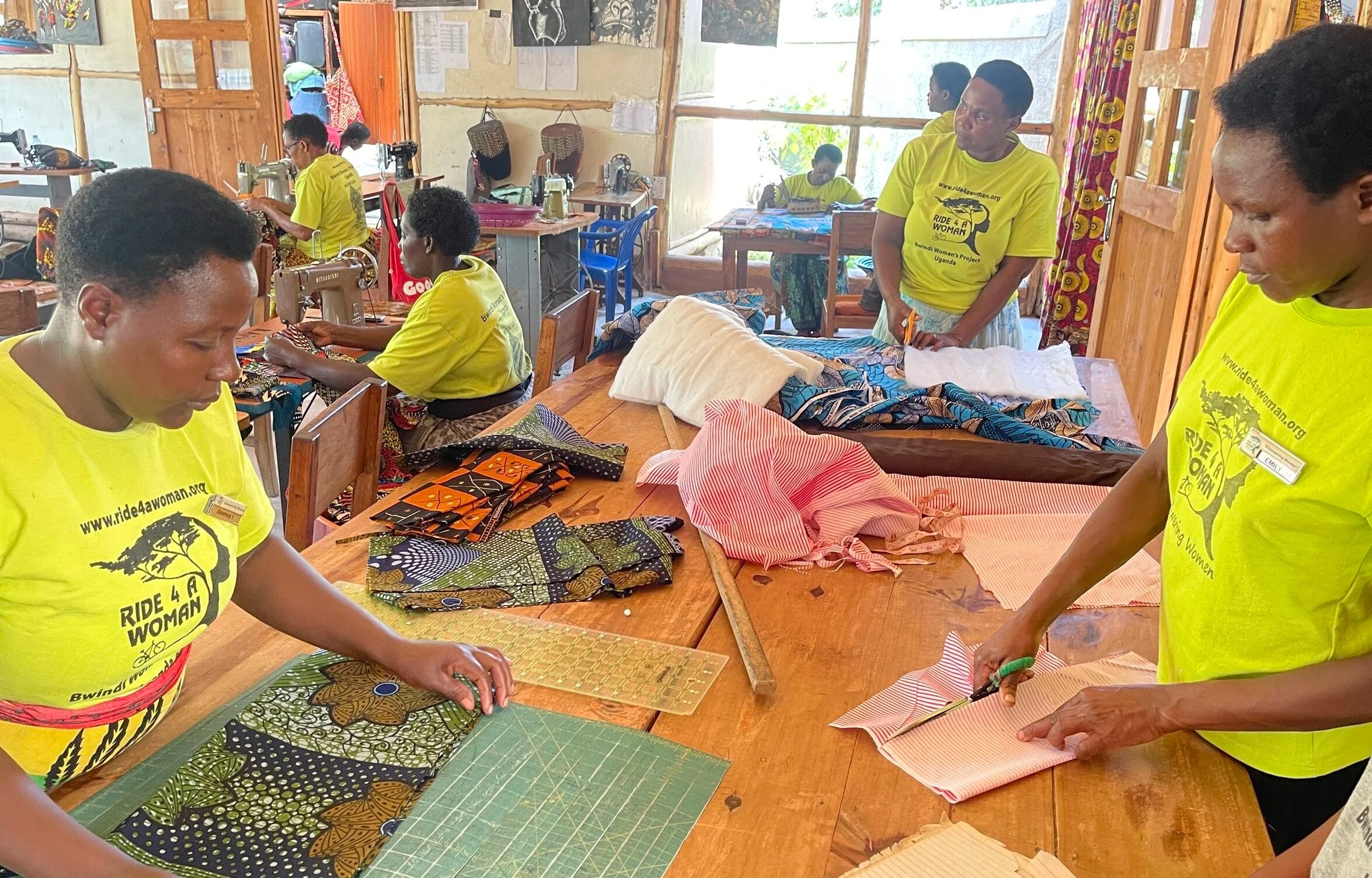
The heart of Ride 4 a Woman’s daily operations lies in skills-based work. Over 300 women from Buhoma and surrounding villages have received training in sewing, tailoring, embroidery, and garment repair.
Each workshop is equipped with Singer treadle machines, cutting tables, and shelves stocked with locally sourced fabrics. The women produce items for sale, including aprons, skirts, handbags, and quilts. Sales from these crafts support the women directly through a revenue-sharing model managed by the centre.
In addition to tailoring, the centre offers bicycle repair training. This activity links back to the project’s founding model. Women learn to fix, assemble, and maintain bicycles, which are rented to visitors or sold locally. This provides both a livelihood skill and a sustainable transport option for the community.
Some participants also receive training in hospitality, customer service, and food preparation. These skills enable a small number of women to work at the on-site guesthouse, where visitors can book a night’s stay. Others offer cooking lessons or lead kitchen-based cultural exchanges for guests passing through Buhoma.
Cultural and Visitor Engagement
Besides production, the project facilitates structured cultural experiences for guests. Women lead traditional dance performances, storytelling sessions, and short guided visits to nearby villages.
These activities are designed to inform and not entertain. They provide context for local customs, social norms, and the daily routines of women in the region. You might see children dancing alongside their mothers. You might be invited to try cooking matoke. These moments are not staged, and they unfold as part of regular life.
In addition, guests may participate in weaving workshops or cooking demonstrations. Some experiences are scheduled, while others occur organically, depending on visitor interest and staff availability.
Social Support and Community Services
On top of the economic programs, Ride 4 a Woman provides structured support services. These include confidential counselling for survivors of domestic violence, access to sanitary products, and group discussions focused on women’s health.
Several programs also provide educational sponsorship for girls from vulnerable households.
The centre maintains a flexible schedule to accommodate women’s domestic obligations. No formal attendance is required, though regular participation is encouraged through mentorship and rotating leadership roles.
The Role of Tourism in Supporting the Project
Tourism provides a consistent source of operational income for Ride 4 a Woman.
Guests contribute by purchasing crafts, booking accommodation, joining cultural workshops, or renting bicycles. These activities generate revenue that supports the women working at the centre.
The location of the project near the Buhoma sector of Bwindi Impenetrable National Park makes it accessible to visitors following the gorilla trekking route.
Guest participation forms part of the centre’s daily rhythm. Individuals may sit in on weaving sessions, cook traditional meals with the women, or observe dance presentations. Some leave donations.
Others join for just an hour to learn about the project’s structure and purpose. These encounters, though brief, create direct economic benefit and social recognition for the women involved.
Tourism also expands the project’s visibility. The initiative is listed in several regional travel guides and has been profiled in print and digital publications. Travel writers, tour planners, and conservation researchers frequently reference Ride 4 a Woman in their coverage of community engagement in Uganda.
This steady attention contributes to the centre’s access to small grants and collaborative partnerships.
As a visitor, your presence at the centre supports a working model of community-led development. Income flows through product sales and services offered by the women themselves.
The exchange remains practical, accountable, and anchored in the day-to-day activities that you will see during your time there.
Impact in Numbers and Stories
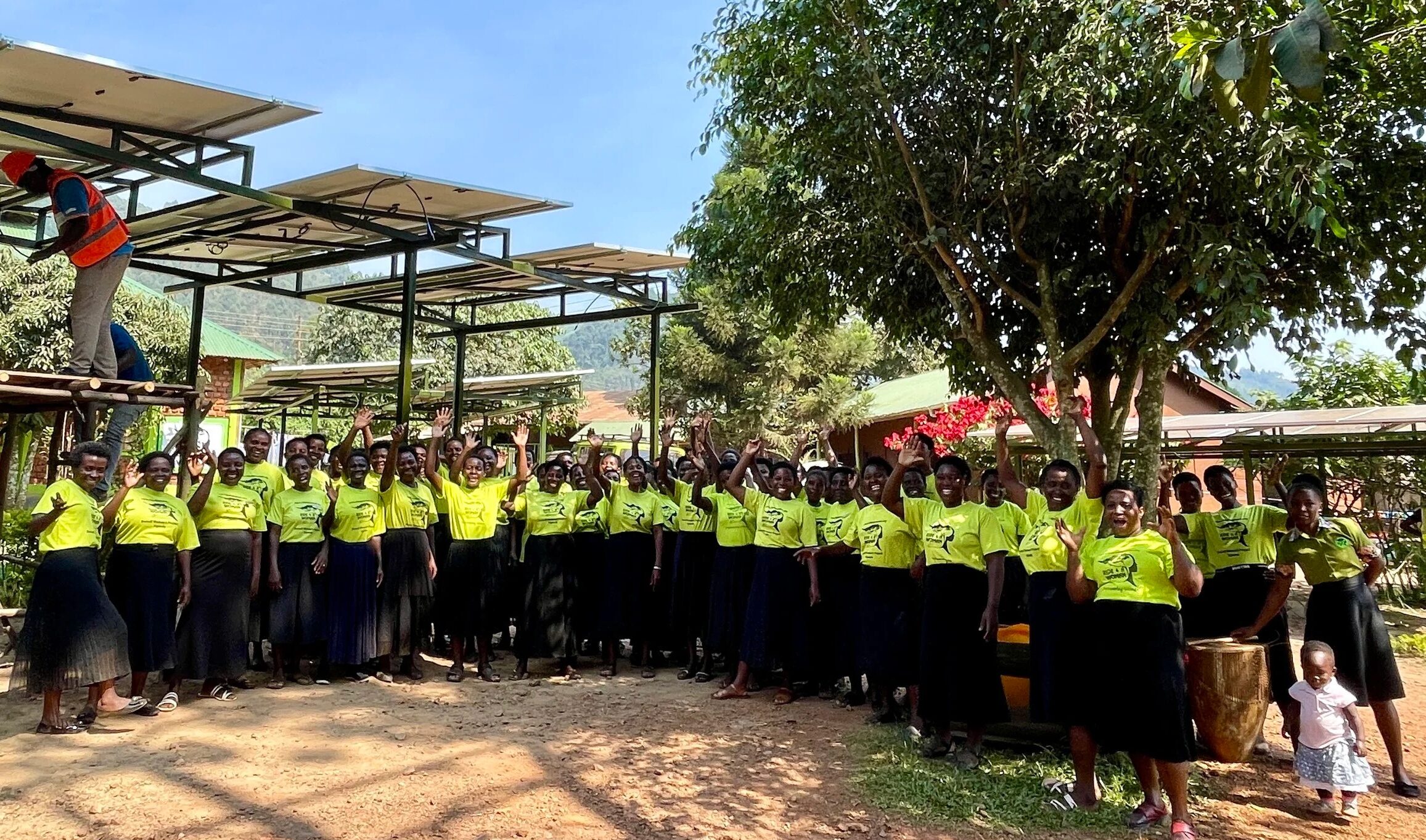
Over 300 women from eleven surrounding villages have taken part in programs at Ride 4 a Woman. On a typical day, around 60 women work at the centre, sewing, weaving, or attending to the guest reception.
The organisation developed a train-the-trainer system in 2012, enabling selected women to teach tailoring and weaving skills to new participants. This internal cycle of mentorship reduces external reliance and reinforces continuity within the group.
Beyond skill-building, the initiative runs several structured community programs. These include microfinance loans, a child sponsorship scheme, and resource support such as solar panel installations, clean water provision, and home construction.
You might wonder how this translates into real outcomes. One member now operates a tailoring stall near the Buhoma trading centre. Another supervises hospitality activities at the project’s accommodation wing. These outcomes are not promotional claims; they represent standard results from long-term participation.
The visible structures at the centre: the working machines, stocked shelves, and classroom spaces, reflect a self-reinforcing model. Money enters through visitor participation, women produce or coordinate services, and the resulting benefits stay rooted in the community.
Recognition and Collaborations
Ride 4 a Woman has received sustained attention across Uganda’s tourism and development circuits. Its inclusion in Bradt’s Uganda Travel Guide, now in its ninth edition, offers validation from one of the most widely used resources for international visitors. The centre is also listed on major travel platforms as a recommended community project near Bwindi.
In addition to tourist-facing platforms, the project has featured in coverage by The Eye Uganda, a publication focused on arts, community, and ethical travel. These references play a minor but sustained role in directing visibility toward the women’s work.
The organisation collaborates with a number of partners, although it keeps its core functions locally anchored. Equipment and supplies have been donated by friends of the project in Australia, Europe, and North America. Some volunteer groups return annually to provide support in sewing instruction or administrative mentorship.

Besides direct partners, Ride 4 a Woman maintains loose coordination with conservation organisations and tour companies that operate around the Bwindi area. These are not formal contracts but working relationships built through years of proximity and mutual interest.
If you are reviewing initiatives that integrate tourism with local development, this is a working example to examine carefully. Its recognition rests not on global awards or conference circuits, but on long-term presence, regional credibility, and continued demand for its services.
Challenges and Opportunities
Understanding the evolution of Ride 4 a Woman requires a balanced view of the difficulties it faces alongside the avenues it can pursue.
Challenges provide context for resilience, while opportunities highlight potential directions for growth within tourism and community development.
Persistent Challenges
Securing sustainable financing remains a major constraint. While handcraft sales and training programs generate income, these revenues fluctuate according to tourist inflows. During low visitor months, the organisation must stretch resources to meet operational costs. International donor support fills some of these gaps, yet dependence on external assistance limits long-term autonomy.
Infrastructure also shapes outcomes. Bwindi is located in a remote corner of southwestern Uganda, accessible mainly through mountainous roads that are often in poor condition.
Transporting handicrafts to urban markets such as Kampala or Entebbe significantly raises costs, reducing profit margins for the women. In addition, limited access to digital infrastructure hinders the organisation’s ability to market products online, restricting visibility beyond physical tourist presence.
Human capacity presents another challenge. The demand for advanced training continually exceeds available resources. Women request instruction in areas such as tailoring, agriculture diversification, and financial literacy. However, the organisation operates with limited staff and equipment.
The absence of consistent technical expertise slows the expansion of new programs that could broaden income streams.
Finally, market competition cannot be ignored. Handcrafts from Bwindi compete with similar products across East Africa, where established supply chains and branding advantage other producers. Without strong branding and distribution networks, Bwindi artisans face difficulty scaling beyond local sales.
Expanding Opportunities
Despite these challenges, Ride 4 a Woman occupies a strategic position within Uganda’s tourism and conservation economy. Annual gorilla trekking in Bwindi brings thousands of international visitors, offering a reliable audience for community-based initiatives.
These tourists provide both direct purchases and word-of-mouth promotion that extends the reach of the organisation globally.
Partnerships present another frontier. Collaborations with fair-trade networks and online craft platforms could integrate Ride 4 a Woman into international markets. Imagine a basket woven in Buhoma reaching a household in Europe or North America: this is not only a sale but also a cultural exchange that validates women’s skills and stories.
Policy shifts also create room for growth. Uganda’s national tourism strategy increasingly highlights community engagement as an essential part of sustainable tourism. This alignment positions Ride 4 a Woman for possible government partnerships, grants, and recognition within official tourism circuits. Such recognition can formalise its role in conservation-linked livelihoods.
In addition, opportunities exist in skill diversification. Expanding training into digital marketing, eco-tourism services, and advanced hospitality could open new income channels. This illustrates how grassroots initiatives evolve into multi-sector institutions when resources align with vision.
Conclusion
Community-based initiatives often carry ambitions that extend far beyond their immediate programs, and Ride 4 a Woman is no exception. It began with sewing machines and bicycles, yet today it represents a framework where women, conservation, and tourism intersect in practical and measurable ways.
What stands out is how the project positions women not as beneficiaries but as agents of change. They generate income, guide cultural exchange, and create a financial base that supports education and healthcare.
You, as someone observing tourism models closely, can see here a concrete demonstration of how empowerment reshapes both households and visitor experiences.
Moreover, the initiative enriches Uganda’s tourism landscape by embedding communities into the economic value chain of gorilla trekking. This is not simply about craft sales or performances.
It is about shifting how development is understood: from isolated interventions to integrated systems where livelihoods, conservation, and tourism strengthen each other.
Looking ahead, the lesson for the industry is clear. Sustainable tourism will only thrive when local communities stand at its core. Ride 4 a Woman in Bwindi shows what that alignment looks like in practice, an institution growing from within, driven by women, and anchored to one of Africa’s most significant conservation areas.