World Gorilla Day is an internationally recognised observance held each year on September 24. It focuses global attention on gorilla conservation and the challenges surrounding it.
The occasion aligns the interests of protected area managers, conservation scientists, tour operators, governments, and local communities in supporting the survival of all gorilla species. It is not an awareness stunt. It is a functional rallying point.
Originally linked to the legacy of Dian Fossey, the day now stands as a strategic platform that reinforces action around mountain gorilla habitats in Rwanda, Uganda, and the Democratic Republic of Congo.
Gorillas represent more than a flagship species. They are ecological indicators, economic catalysts, and a barometer for regional peace and protected area management in Central Africa.
You may already be familiar with the name, but do you fully understand the significance of what World Gorilla Day has come to represent in conservation and tourism corridors?
Besides its symbolic value, the day provides a formal opportunity for institutions and individuals to reassess their commitments to sustainable partnerships, resource sharing, and education at every level.
This article examines the origins, activities, and global significance of World Gorilla Day, situating it within the realm of professional tourism and policy interest.
The Origin of World Gorilla Day
World Gorilla Day was first officially recognised in 2017 through the initiative of the Dian Fossey Gorilla Fund, supported by a coalition of conservation partners.
Its creation responded to the growing need for an annual, unified moment of awareness to spotlight gorilla protection across national and institutional boundaries. Since then, the day has become an international fixture on the conservation calendar.
The selection of September 24 marks the date in 1967 when Dian Fossey established the Karisoke Research Center in Rwanda’s Volcanoes National Park.
Her work brought the world’s attention to the plight of the mountain gorilla and reshaped how field conservation integrates research, local partnerships, and international policy. Although Fossey was murdered in 1985, her methodology still influences conservation protocols across protected gorilla habitats.
It’s worth asking: why does this historical detail matter now? Because understanding where the day came from sharpens how it is celebrated today. If you plan to engage with World Gorilla Day, whether through tourism, funding, or advocacy, it is essential to be aware of the legacy you’re building.
The Global Relevance of World Gorilla Day
Gorillas play a crucial role within tropical forest ecosystems, serving as seed dispersers and ecological architects. Their survival affects forest regeneration, species interactions, and carbon sequestration.
Beyond their biological role, gorillas represent a flagship species: one whose conservation protects broader ecological communities and draws attention to vanishing habitats.
World Gorilla Day complements existing international efforts to preserve biodiversity and combat species extinction. It aligns with Target 4 of the Kunming-Montreal Global Biodiversity Framework, which prioritises the recovery and conservation of threatened species.
In addition, gorilla-focused conservation intersects with the United Nations’ Sustainable Development Goals—specifically, Goal 15 (Life on Land), Goal 13 (Climate Action), and Goal 8 (Decent Work and Economic Growth) — through tourism-linked livelihoods.
Although gorillas are native to only parts of Uganda, Rwanda, the Democratic Republic of the Congo, Cameroon, Gabon, the Republic of the Congo (Brazzaville), and Nigeria, conservation efforts have gone global.
Institutions in Europe, North America, and Asia now incorporate gorilla conservation into their education, fundraising, and corporate responsibility agendas. If you work in conservation or travel-related fields, this internationalisation invites your participation—because the fate of gorillas is no longer a local concern but rather a global one.
Gorilla Species – A Quick Conservation Snapshot
Gorillas belong to the genus Gorilla, which is subdivided into two species with four recognized subspecies.
Each occupies a distinct ecological niche and faces different levels of threat.
Understanding these distinctions is crucial for effective conservation, tourism planning, and the design of international policies.
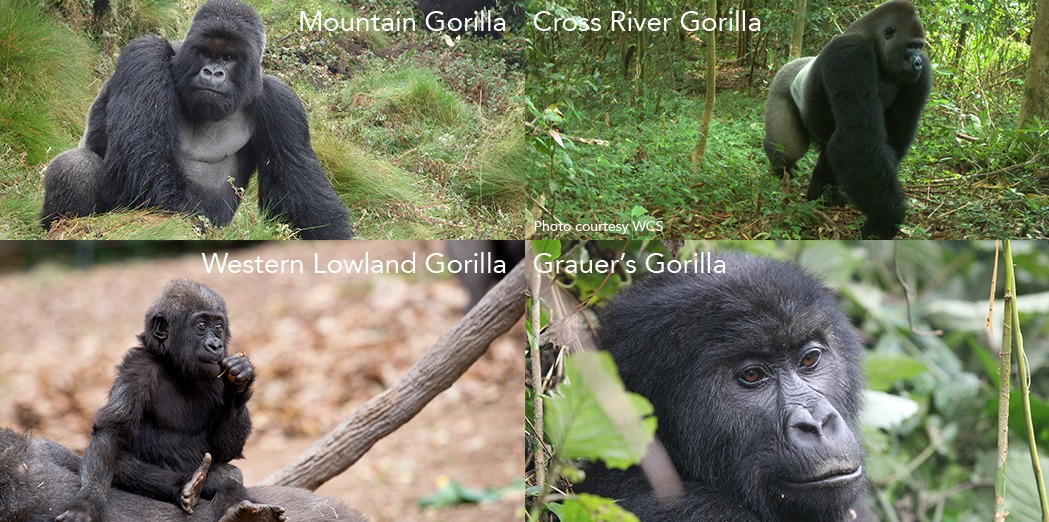
1. Mountain Gorilla (Gorilla beringei beringei)
- Range: Rwanda, Uganda, Democratic Republic of Congo
- IUCN Status: Endangered
- Estimated Population: Just over 1,000 individuals (as of 2024)
- Key Notes: Mountain gorillas inhabit high-altitude montane forests, primarily within Bwindi Impenetrable National Park and the Virunga Massif. They are the only gorilla population with recorded population growth, driven by strict conservation and regulated tourism.
2. Eastern Lowland Gorilla (Gorilla beringei graueri)
- Range: Eastern Democratic Republic of Congo
- IUCN Status: Critically Endangered
- Estimated Population: Fewer than 3,800 individuals
- Key Notes: Also known as Grauer’s Gorilla, this subspecies occupies lowland tropical forests. Armed conflict, mining, and habitat degradation continue to threaten its survival despite recent monitoring efforts.
3. Western Lowland Gorilla (Gorilla gorilla gorilla)
- Range: Gabon, Cameroon, Republic of Congo, Equatorial Guinea, Central African Republic, Angola (Cabinda)
- IUCN Status: Critically Endangered
- Estimated Population: Likely over 100,000, but highly fragmented
- Key Notes: Although the most numerous, western lowland gorillas face high mortality from Ebola, poaching, and deforestation. Population assessments remain uncertain due to dense forest cover and limited access.
4. Cross River Gorilla (Gorilla gorilla diehli)
- Range: Border region between Nigeria and Cameroon
- IUCN Status: Critically Endangered
- Estimated Population: Fewer than 300 individuals
- Key Notes: The rarest gorilla subspecies. It lives in isolated forest patches and is severely threatened by habitat loss and limited genetic diversity. Conservation relies on transboundary cooperation and community integration.
What Happens on World Gorilla Day
<p>World Gorilla Day functions as both an institutional campaign and a grassroots awareness movement.
Activities range from on-site conservation education in protected areas to digital advocacy and global fundraising.
These efforts often vary in scale depending on local access, capacity, and visibility, but the overall goal remains the same: raise awareness and reinforce the urgency of gorilla protection.
a. Activities in Gorilla Range States
In Uganda, Rwanda, and the Democratic Republic of Congo, the day is marked by educational sessions in schools near protected areas, radio talk shows, and stakeholder meetings led by national wildlife authorities.
Rangers, researchers, and conservation NGOs often use this opportunity to showcase year-on-year progress in monitoring, veterinary care, and anti-poaching patrols.
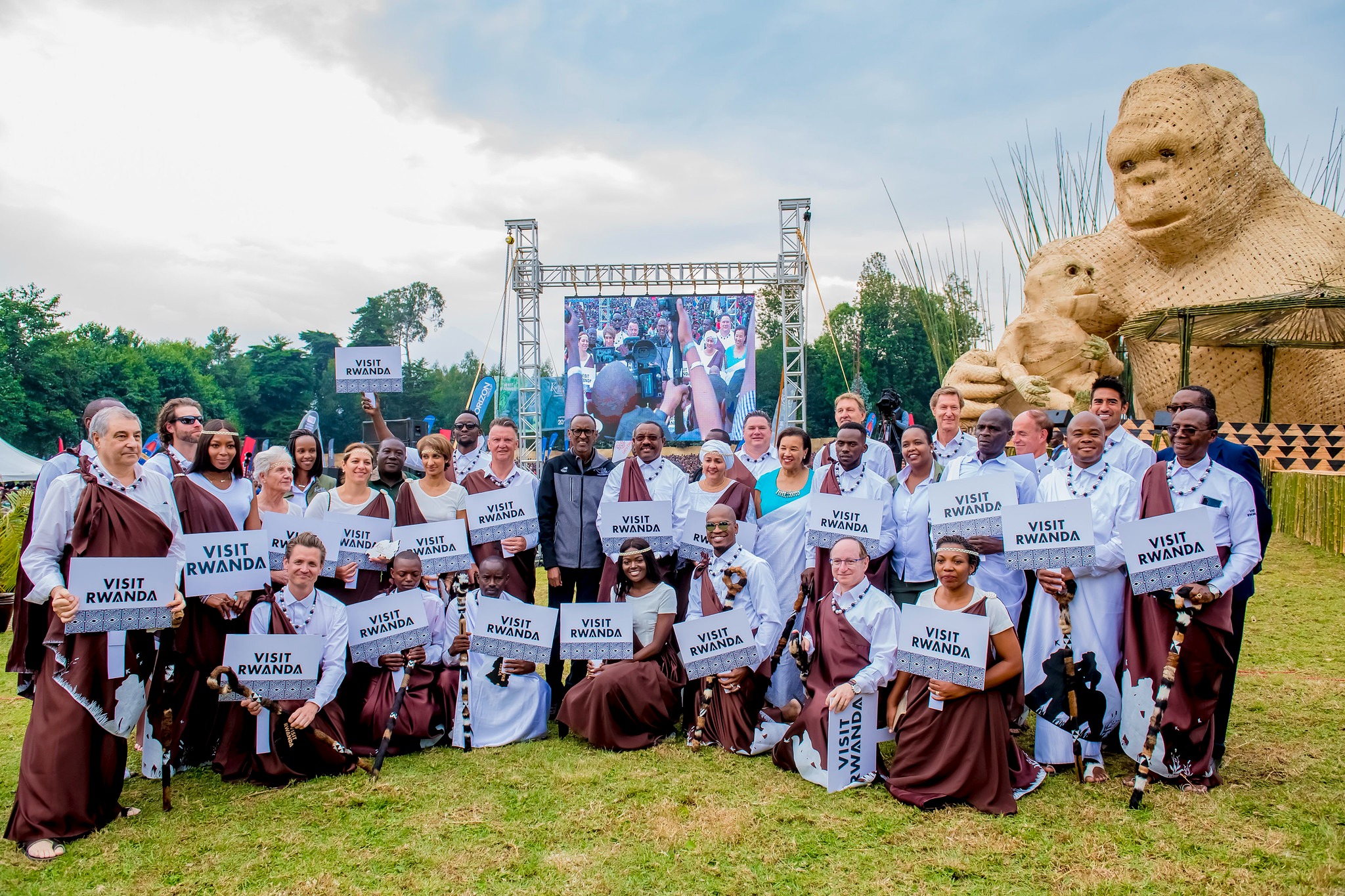
In 2023, the Rwanda Development Board (RDB) highlighted World Gorilla Day in conjunction with its annual Kwita Izina gorilla naming ceremony, although the two events are distinct from each other.
Uganda Wildlife Authority has previously published themed statements through its communication channels to mark the day and reflect on conservation goals.
b. Global Awareness Campaigns
Outside of the range states, international conservation organisations such as the Dian Fossey Gorilla Fund, WWF, and the Wildlife Conservation Society engage audiences through online campaigns.
These often include educational webinars, downloadable teaching materials, fundraising drives, and short-form content shared via social media.
The day also serves as an opportunity for institutions to spotlight research publications, launch gorilla-related reports, or share field documentaries. In previous years, campaigns have utilized hashtags such as #WorldGorillaDay and #ProtectGorillas to anchor online engagement.
c. Tourism and Institutional Participation
Tour operators, safari lodges, and conservation-focused tourism brands often observe World Gorilla Day by sharing curated stories, promoting responsible travel practices, or donating a portion of their revenue to conservation NGOs.
These actions are not centrally coordinated but are typically undertaken by individual companies in alignment with their sustainability policies.
Some zoos and academic institutions also use the day to educate the public about gorilla conservation, particularly in countries where gorillas do not naturally occur. These efforts include temporary exhibitions, interactive sessions for students, and even art contests tied to gorilla themes.
Challenges Still Facing Gorilla Conservation
I. Habitat Pressures from Expanding Human Settlement
Habitat loss remains the most pervasive threat to gorilla survival, particularly outside formally protected areas.
In Uganda, for example, the Bwindi-Sarambwe ecosystem is under continuous pressure from population growth in Kanungu and Kisoro districts.
Communities living along the forest edge rely on firewood, farmland, and building materials—all of which put direct strain on gorilla habitat.
Although laws prohibit encroachment into national parks, buffer zones are rarely reinforced with long-term land-use planning.
In parts of eastern DRC and western Rwanda, the distinction between “community land” and conservation zones is increasingly blurred.
As land becomes scarce, gorillas are forced into fragmented habitats, resulting in isolation of groups, reduced genetic diversity, and increased likelihood of human-gorilla conflict.
Attempts to address this remain underfunded and inconsistently enforced.
Habitat loss is not a future concern. It is a daily, measurable erosion of the ecological space gorillas require to survive.
II. Insecurity, Armed Conflict, and Weak Governance
In the eastern DRC, decades of armed conflict have created persistent barriers to effective conservation.
Several known gorilla ranges, including areas around Kahuzi-Biega National Park and Maiko National Park, remain inaccessible due to militia activity.
Researchers, rangers, and conservation NGOs face security risks that limit their ability to conduct patrols, collect data, and implement veterinary interventions.
According to field reports from the Institut Congolais pour la Conservation de la Nature (ICCN) and its partners, such as the Wildlife Conservation Society, some gorilla groups in remote areas have not been monitored in years.
Insecurity also disrupts livelihood programmes that communities depend on in exchange for conservation compliance.
The problem is compounded by weak governance frameworks, particularly where overlapping mandates exist between local, provincial, and national authorities.
Without reliable enforcement mechanisms, even well-drafted conservation policies fail in practice. In such contexts, the survival of gorillas depends more on informal negotiation than formal protection.
III. Extractive Industry Expansion and Infrastructure Pressure
Oil and mineral extraction pose a growing threat to gorilla habitats.
In 2022, the DRC government auctioned oil blocks that overlap with rainforest zones adjacent to Virunga National Park, home to a third of the world’s remaining mountain gorillas.
Despite international opposition, these concessions remain legally open, highlighting the tension between short-term state revenue and long-term biodiversity protection.
Mining is also a significant factor in eastern DRC and parts of Cameroon.
Illegal and artisanal operations frequently occur within or adjacent to gorilla habitats, particularly for resources such as coltan, gold, and timber. These operations bring new roads, transient settlements, and increased risk of poaching, either for bushmeat or as bycatch in wire snares.
Infrastructure development compounds the issue. Roads built to serve extractive industries cut through previously intact forests, creating edge effects that degrade ecosystems and open previously unreachable areas to opportunistic farming or hunting.
The environmental cost of this expansion is rarely included in national economic planning models.
IV. Health Risks and Zoonotic Disease Transmission
Disease remains a critical and under-recognised threat to gorilla populations. Most gorilla groups, particularly those that have been habituated for tourism, are vulnerable to pathogens carried by humans.
Respiratory infections have been documented in multiple locations, often transmitted through guides, researchers, or tourists, despite the use of face masks and social distancing rules.
Of particular concern are viral outbreaks like Ebola virus disease, which has caused mass die-offs of western lowland gorillas in Gabon and the Republic of Congo.
These events are not speculative. Documented cases in the early 2000s resulted in mortality rates of up to 90 percent in affected groups.
Although veterinary teams monitor health in habituated populations, unhabituated groups often go unexamined.
In many forests, surveillance remains limited by funding and access constraints. Climate change is likely to increase disease vulnerability, as shifting weather patterns alter the distribution of parasites and pathogens.
Conclusion: How You Can Support Gorilla Conservation
The success of gorilla conservation does not depend solely on government agencies or scientific institutions. It also hinges on deliberate support from individuals and sectors that influence public behaviour, finance, education, and tourism.
Is your engagement professional or personal? Whatever it may be, there are ways and avenues to contribute to long-term protection efforts.
1. Fund Direct Conservation Work
Conservation requires predictable, long-term financial support. Direct donations to field-based organisations such as the Dian Fossey Gorilla Fund, Gorilla Doctors, and the International Gorilla Conservation Programme (IGCP) provide critical resources for ranger salaries, anti-poaching patrols, and veterinary interventions.
Choose funding models that prioritise unrestricted donations.
These allow field teams to respond quickly to changing conditions. This could be a disease outbreak, an encroachment incident, or an equipment failure
2. Choose Ethical Gorilla Tourism Providers
Tourism, when managed responsibly, is one of the most effective tools for conservation funding available. Select licensed operators that comply with national permit regulations and contribute transparently to conservation fees.
Reputable operators will provide you with a briefing on trekking protocols, enforce minimum distances from the gorillas, and support local community projects.
In Uganda and Rwanda, a portion of your trekking permit fee is redistributed to neighbouring villages through structured revenue-sharing systems.
Confirm this before booking, and avoid operators who treat gorilla visits as casual tourism products. If you’re unsure, ask to see their conservation affiliations or local partnerships.
READ ALSO – Gorilla Tourism Revenue: How Local Communities Benefit.
3. Support Conservation Education and Knowledge Sharing
Promote accurate, locally grounded information about gorilla ecology and conservation frameworks.
This applies in classroom settings, professional training, and public-facing content. Institutions that run zoos, travel programmes, or academic exchanges can integrate World Gorilla Day materials into their annual awareness calendar.
While conservation education thrives on storytelling, it is also about facts, policies, threats, and solutions. Use verified sources, highlight regional differences, and avoid using images or phrasing that anthropomorphise wildlife.