
Uganda Wildlife Authority (UWA) updates its national park entry fees periodically to reflect changing conservation demands and operational costs.
In 2025, a revised fee schedule applies across all major national parks and protected areas, affecting both international and East African visitors.
These entry fees influence the cost of safari itineraries, how tour operators structure packages, and how individuals plan self-guided visits.
The updated costs are also part of UWA’s broader conservation financing model, supporting protected area management, wildlife security, and ecological monitoring.
Besides entry costs, some activities, such as gorilla tracking, chimpanzee habituation, and guided hikes, require separate permits.
Others, such as vehicle access or aircraft landing, are subject to add-on charges. Understanding the full scope of these fees is essential for accurate budgeting and compliance.
If you’re organising a trip, pricing a group tour, or reviewing rates as part of operational planning, this guide offers a reliable, point-by-point breakdown. It saves you the trouble of navigating fragmented sources.
Overview of Park Categories and Fee Structure
Uganda Wildlife Authority (UWA) groups park entry fees into three visitor categories. Each category has its own rate structure, defined as follows:
1. Visitor Categories
- Foreign Non-Residents (FNR): Individuals without residency or work permits for Uganda or East Africa. This group pays the highest rate tier.
- Foreign Residents (FR): Foreign nationals holding valid Uganda or East African residency permits.
- East African Citizens (EAC): Citizens of Uganda, Kenya, Rwanda, Tanzania, Burundi, South Sudan, and the Democratic Republic of Congo.
All Uganda park entry fees are valid for a single calendar day per person, unless explicitly stated otherwise. Overnight stays inside parks typically require multiple-day entry payments.
2. Special Permits
Some wildlife experiences fall outside the general entry fee structure. These require advance purchase and operate under a limited-quota model. Key examples include:
- Gorilla Tracking Permit: Mandatory for access to Bwindi Impenetrable or Mgahinga Gorilla National Parks. Each permit covers one tracking session.
- Chimpanzee Tracking Permit: Required for activities in Kibale Forest, Budongo Forest, or Kalinzu. Rates vary by location and permit type (tracking or habituation).
These permits are non-refundable, and their availability is subject to seasonal booking patterns.
3. Activity-Based Charges
In addition to entry fees, UWA levies charges for guided or regulated activities. Examples include:
- Nature walks
- Night game drives
- Birding expeditions
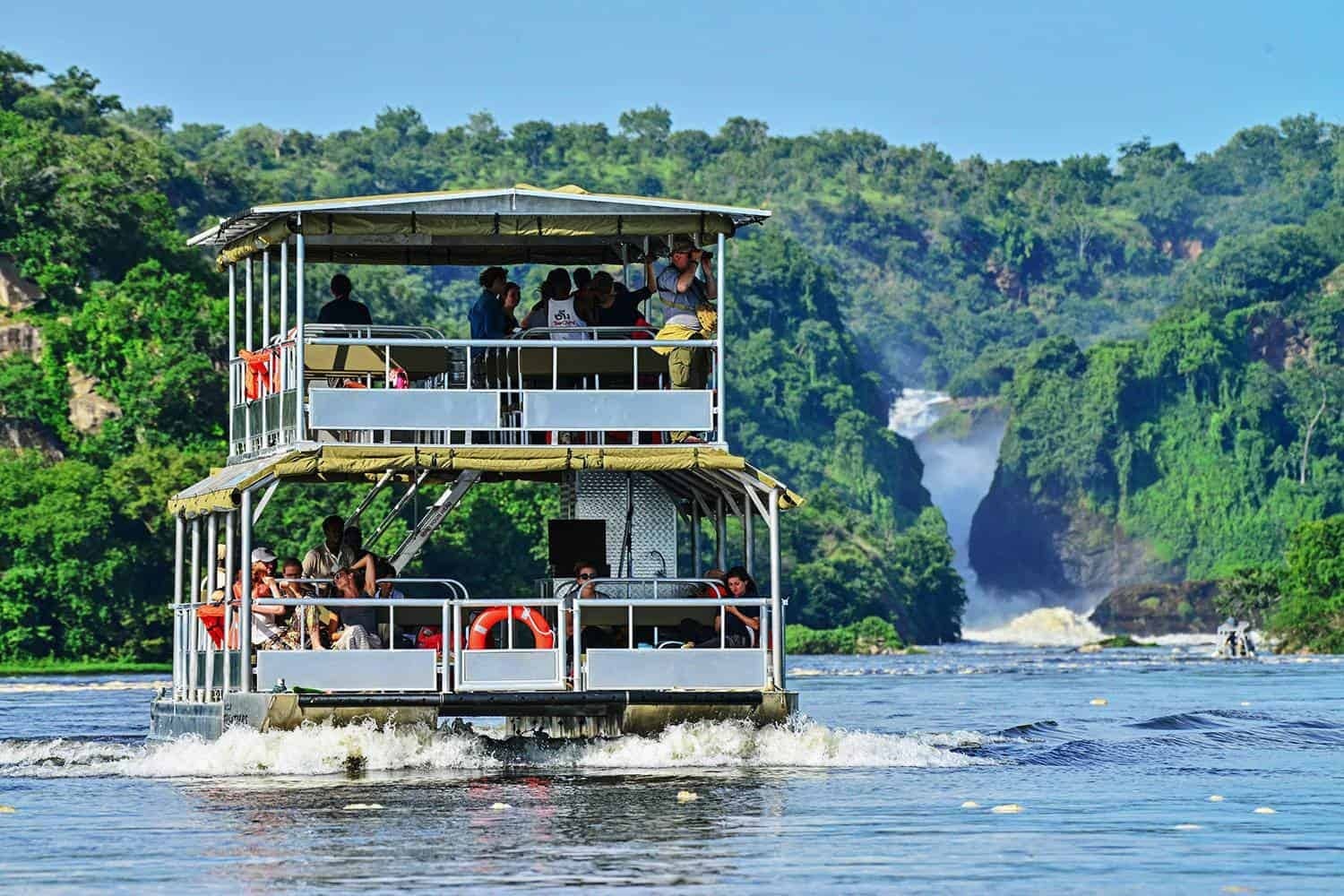
- Boat cruises
- Hot springs access
Most of these activities incur additional fees per person, and you must book them on-site or through licensed operators.
4. Vehicle and Aircraft Entry
Motorized transport into parks attracts separate fees depending on type and weight category. These include:
- Private cars and minibusses
- Safari trucks and tour vehicles
- Motorcycles (in specific parks)
- Aircraft landing fees (light aircraft under 15 seats)
- Helicopter fees
- Parking charges for airstrips and special permits for drone use
You’ll want to double-check vehicle classifications and ensure permits align with the intended activity, especially for multi-day visits.
UWA reaffirmed these categories to streamline revenue collection, improve visitor tracking, and reinforce equitable access.
All fees are in Uganda shillings, and in some cases in US dollars for foreign categories.
Complete List of Uganda National Park Entry Fees (2025)
Notes on currency and categories:
• Fees are per person per 24 hours unless otherwise stated.
• “Foreign Non‐Residents (FNR)” = visitors without East African residency/work permits.
• “Foreign Residents (FR)” = foreign nationals holding valid Uganda or East Africa residence/work permits.
• “East African Citizens (EAC)” = citizens of Uganda, Kenya, Rwanda, Tanzania, Burundi, South Sudan, and the Democratic Republic of Congo.
• Always confirm with the Uganda Wildlife Authority (UWA) immediately before travel.
| National Park | Fee for FNR | Fee for FR | Fee for EAC |
| Murchison Falls National Park | US$ 45 | US$ 35 | UGX 25,000 |
| Queen Elizabeth National Park | US$ 40 | US$ 30 | UGX 20,000 |
| Kibale Forest National Park | US$ 40 | US$ 30 | UGX 20,000 |
| Lake Mburo National Park | US$ 40 | US$ 30 | UGX 20,000 |
| Kidepo Valley National Park | US$ 40 | US$ 30 | UGX 20,000 |
| Semuliki National Park | US$ 35 | US$ 25 | UGX 15,000 |
| Rwenzori Mountains National Park | US$ 35 | US$ 25 | UGX 15,000 |
| Mount Elgon National Park | US$ 35 | US$ 25 | UGX 15,000 |
Special Case – Gorilla & Habituation Permits (2025)
Though these involve park entry fees implicitly covered, they are distinct and higher‐tier in Uganda
| Experience | FNR | FR | EAC |
| Gorilla Trekking Bwindi Impenetrable National Park / Mgahinga Gorilla National Park | US$ 800 | US$ 700 | UGX 300,000 |
| Gorilla Habituation (Bwindi) | US$ 1,500 | US$ 1,000 | UGX 750,000 |
Important Clarifications for You
- Activity-specific fees (such as game drives, night drives, and vehicle entry) are not included here and must be added when you plan your trip.
- Rates for children (ages 5‑15) and student/education group rates vary; confirm locally.
- Payment often requires presenting a national ID or a residency/work permit to verify the category.
Specialized Permits and Activity Fees
Uganda Wildlife Authority classifies certain activities as specialized. These experiences require dedicated permits, issued separately from standard entry fees. Most are quota-limited and must be booked well in advance.
Below is a breakdown of the most critical experiences in Uganda.
1. Gorilla Trekking Permits
| Category | Permit Fee | Locations |
| Foreign Non-Resident | US$ 800 | Bwindi, Mgahinga |
| Foreign Resident | US$ 700 | Bwindi, Mgahinga |
| East African Citizen | UGX 300,000 | Bwindi, Mgahinga |
READ ALSO: Understanding the $1500 cost of Gorilla Trekking in Rwanda
2. Gorilla Habituation Permits
| Category | Permit Fee | Location |
| Foreign Non-Resident | US$ 1,500 | Bwindi |
| Foreign Resident | US$ 1,000 | Bwindi |
| East African Citizen | UGX 750,000 | Bwindi |
This permit grants access for 4 hours to a semi-habituated gorilla group under the supervision of researchers and rangers. It’s available only in the Rushaga sector (Bwindi).
3. Chimpanzee Tracking & Habituation
| Activity | Location | FNR | FR | EAC |
| Chimp Tracking | Kibale | US$ 250 | US$ 200 | UGX 180,000 |
| Chimp Tracking | Budongo | US$ 130 | US$ 120 | UGX 85,000 |
| Chimp Habituation | Kibale | US$ 300 | US$ 250 | UGX 250,000 |
Permit fees are per person per session. Entry to the forest reserve or park is sometimes inclusive, but always confirm with the booking agent.
Kalinzu Forest offers chimp tracking at a different tariff, often lower than in UWA-controlled areas.
4. Mountaineering and Hiking Fees
Rwenzori and Elgon are the two key mountaineering destinations. In addition to park entry, the Uganda Wildlife Authority charges for multi-day trekking routes.
| Experience | Park | Fee (FNR/FR) | Fee (EAC) |
| Rwenzori Trekking – Central Circuit (6-9 days) | Rwenzori NP | US$50/day | UGX 50,000/day |
| Mount Elgon Full Hike (Wagagai Peak) | Mt Elgon NP | US$ 50 | UGX 50,000 |
Porter, guide, and camping fees are handled through separate contracts. Always check for seasonal access constraints due to rainfall or trail maintenance.
5. Night Game Drives
Night game drives require UWA-guided vehicles in most parks. Independent night drives are not permitted in most reserves.
| Park | Fee per person |
| Queen Elizabeth NP | US$ 40 |
| Murchison Falls NP | US$ 40 |
| Lake Mburo NP | US$ 40 |
Private vehicle drives are only allowed under direct UWA ranger escort and often require special approval. Always schedule in advance.
READ ALSO: Night Game Drives in Uganda: What Animals Can You Spot?
6. Other Notable Activity Fees (2025)
| Activity | Typical Fee (FNR/FR) | Locations |
| Boat Cruise | US$30–35 | Murchison, Queen Elizabeth, Lake Mburo |
| Birding Excursions | US$30–40 | Semuliki, Kibale, Lake Mburo, Mabamba |
| Sempaya Hot Springs Guided Walk | US$ 30 | Semuliki NP |
| Salt Lake Tour | UGX 20,000 | Katwe region, Queen Elizabeth NP |
| Guided Nature Walks | US$15–20 | Various parks |
| Canoe Rides | UGX 20,000–30,000 | Lake Bunyonyi, Mabamba |
Each of these requires confirmation upon arrival, and some, like boat cruises, may include additional service charges or third-party operator fees.
You’re advised to book any specialized activity at least 4-6 weeks in advance, especially during peak seasons (June–September, December–February).
UWA generally requires prepayment of permits to reserve slots.
Vehicle and Aircraft Entry Fees
Uganda Wildlife Authority imposes separate entry charges for vehicles and aircraft entering protected areas. These fees apply per entry, per day, and are also typically levied at the park gate or designated airstrip.
1. Private and Commercial Vehicles
Entry fees depend on vehicle type and weight class. Below is the standard 2025 schedule for vehicles (excluding special-purpose categories):
| Vehicle Type | Fee per Entry (UGX) |
| Motorcycle | 10,000 |
| Saloon Car | 20,000 |
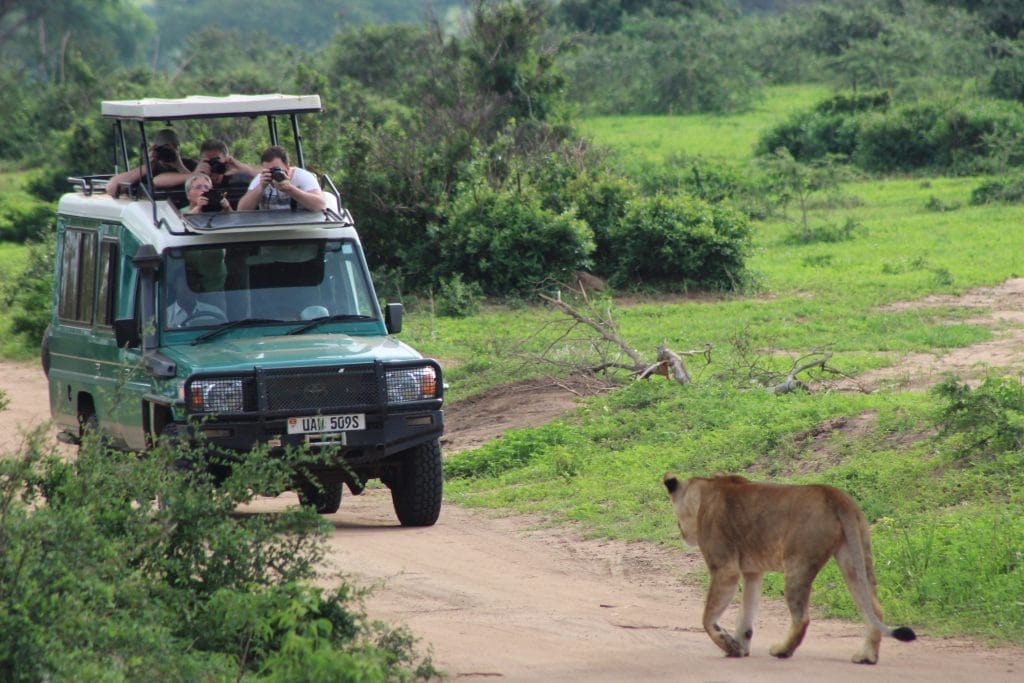
| Minibus / 4WD (Safari Vehicle) | 30,000 |
| Pickup / Double Cabin | 30,000 |
| Tour Company Van | 30,000 |
| Heavy Goods Vehicle (below 5 tonnes) | 50,000 |
| Heavy Goods Vehicle (above 5 tonnes) | 100,000 |
The rates apply per 24-hour cycle unless a multi-day clearance is negotiated with UWA regional authorities.
Licensed tour operators with valid annual vehicle passes may also qualify for discounted or waived daily entry, depending on the terms of pre-approval. It’s always best to confirm these details with your regional UWA office.
If you’re planning a multi-vehicle itinerary, remember to factor in each vehicle’s fee as a separate line item.
2. Special Use Vehicles and Exemptions
Ambulances, fire trucks, and UWA-authorised research vehicles may be exempt from standard vehicle entry charges. However, such exemptions require written clearance from UWA head offices or the conservation area manager.
Tour company support trucks, supply vehicles, and backup units are charged per gross weight category.
3. Aircraft and Landing Charges
Private and commercial aircraft pay per landing and per aircraft type. As of 2025:
| Aircraft Type | Fee per Landing (UGX) |
| Light Aircraft (up to 3 seats) | 40,000 |
| 4–6 Seats | 60,000 |
| 7–15 Seats | 80,000 |
| 16–30 Seats | 150,000 |
| Above 30 Seats | 250,000 |
| Helicopter (any size) | 250,000 |
Landing is permitted only on approved airstrips, including Pakuba (Murchison), Mweya (Queen Elizabeth), and Kidepo airstrip. Prior flight plan submission is required.
Helicopter access is heavily restricted in ecologically sensitive areas such as Bwindi and Mgahinga. Clearance is issued only under specific emergency or security guidelines.
4. Parking and Overnight Charges
Parking fees may apply to aircraft or vehicles staying overnight in protected areas. These are issued on a case-by-case basis and are subject to field inspection.
Drone use is not automatically permitted. Commercial drone operations require licensing from UCC, plus special UWA filming permits. These are through a separate application process.
If your itinerary involves fly-in safaris, chartered routes, or aviation logistics, consult UWA’s aviation coordination desk before flight operations.
Concession Fees and Filming Charges
Uganda Wildlife Authority (UWA) regulates commercial use of national parks through concession agreements and permit-based access models. These provisions apply to entities or individuals earning from tourism, media, or advertising within protected areas.
1. Tourism Concession Fees
Entities wishing to operate lodges, campsites, or tourism services inside parks must apply for a concession license. These are through a competitive bidding process under UWA’s Public-Private Partnership (PPP) framework.
Key components of concession agreements include:
- Land lease fee: Based on acreage, zoning, and location.
- Conservation fee: Typically a percentage of gross turnover (commonly 10–15%).
- Annual renewal fee: Varies by concession category and facility type.
Concession holders must adhere to UWA’s minimum standards for eco-design, waste management, community benefit sharing, and employment ratios.
In addition to infrastructure-based concessions, UWA also permits mobile tented camps and activity-specific operations (e.g., horseback riding, balloon safaris). These require separate negotiation and impact assessments.
2. Filming and Photography Permits (2025)
All commercial filming inside parks is subject to approval and requires advance payment. UWA categorizes filming permits by scope and duration.
| Permit Type | Fee (UGX/day) | Notes |
| Still Photography – Commercial Use | 250,000 | For catalogs, product shoots, and paid use |
| Filming (Local Crew) | 1,500,000 | For Ugandan productions |
| Filming (International Crew) | 4,000,000 | Includes documentaries, features, and branded content |
| Additional Support Staff | 200,000 per person/day | Excludes crew in main fee |
Permit fees in Uganda do not include park entry fees or charges, accommodation, or logistical support. All teams must be accompanied by UWA rangers or designated liaison staff during field work.
Permit application includes:
- Synopsis or script
- Intended distribution
- Equipment list
- UAV (drone) request form (if applicable)
- Consent forms for communities (if filming people)
Turnaround time for approval typically ranges from 7 to 14 business days.
3. Drone Use and Aerial Filming
Operating a drone inside Uganda’s protected areas requires layered approvals:
- Uganda Communications Commission (UCC) registration for the drone model and operator.
- Uganda Civil Aviation Authority (UCAA) airspace clearance for flight zones and altitude.
- UWA Drone Filming Permit, including filming fees and ranger accompaniment.
Drone use is restricted in:
- Gorilla tracking zones (Bwindi, Mgahinga)
- Community-sensitive areas
- Flight zones near military or border installations
If your shoot involves drones, budget at least UGX 4,000,000–6,000,000 total for approvals, escort, and insurance coverage.
Filming without a permit or misrepresenting the shoot’s purpose may result in the confiscation of equipment and legal penalties.
As of 2025, UWA enforces a zero-tolerance policy for unauthorized commercial documentation in restricted areas.
If you’re planning content production inside Uganda’s national parks, early coordination with the UWA tourism and media licensing office is strongly advised.
Where and How to Pay Park Entry Fees in Uganda
Uganda Wildlife Authority (UWA) has standardised its payment systems across all national parks, reserves, and conservation areas. Entry fees and activity permits can be paid either before arrival or on-site at park gates, depending on the category and booking structure.
1. Accepted Payment Channels
UWA currently accepts the following methods for park access and permit payments:
Bank Deposit or Transfer:
-
- Payable to Uganda Wildlife Authority collection accounts.
- Bank details are provided upon booking or permit request.
- Proof of payment must be submitted digitally or in print.
Online Payment Portal:
-
- Access via www.ugandawildlife.org.
- Accepted for selected permits (e.g., gorilla, chimpanzee, mountaineering).
- Confirmation is sent to your email upon payment.
Point of Sale (POS) at Park Gates:
-
- Most UWA gates have POS terminals.
- Debit or credit card (Visa or Mastercard) required.
- Network downtime may occur, especially in remote parks.
Mobile Money (MTN/Airtel):
-
- Supported at some major entry stations.
- Check in advance, as not all parks process mobile payments consistently.
If you’re managing a group tour, it’s recommended to consolidate all fees through a single transaction to avoid delays at the gate.
2. Currencies and Conversion Rules
- Foreign Non-Residents must pay in US dollars for permits and entry.
- Foreign Residents and East African Citizens may pay in Ugandan shillings, but must present valid ID or residence permits.
Where exchange is required, UWA uses official Bank of Uganda exchange rates, updated monthly.
Some parks in border districts (e.g., Kidepo, Mgahinga) occasionally receive payments in other East African currencies, but only under the officer’s discretion.
3. Document the officer
To process your payment and entry, you must present:
- National ID or passport (for category verification)
- Valid resident permit (for FR classification)
- UWA-issued invoice or payment code (if pre-paid)
- Printed permit or digital confirmation (for gorilla, chimp, and hiking experiences)
For corporate visits, an official letter of introduction from your institution may be requested.
4. Entry Clearance and Tips for Smooth Access
- Arrive at park gates at least 30–45 minutes early, especially during peak months (June–September, December–February).
- Retain all receipts throughout your visit. Random spot checks may occur at park exit points.
- For overnight stays, confirm whether the accommodation includes in-park re-entry privileges or if you must pay again the following day.